


- Provinces top
- Hokkaido
- Milky House in Churui
- Tokachi Station
- Suzuki-san - dairy farmer
- Kyodogakusha Shintoku
- Tohoku
- Ohsawa Onsen
- Tsurunoyu - hot spring
- Kanto & Koshinetsu
- Last concert in M-Uonuma
- Concert in Minami-Uonuma
- Tomaru pig farm
- Kofun in Gunma
- Inariyama Kofun
- Koma Shrine and Shoten-in
- Choshi - fish and soy sauce
- Narita Dream Dairy Farm
- Iwai - sea-bathing town
- Yokosuka - Mikasa and Curry
- Nihon Minka-en
- Hokuriku
- Noto Peninsula
- Yunode Ryokan
- Yuwaku Onsen
- Kanazawa
- Kansai
- Fushimi Inari-Taisha
- Home-cooking dishes in Kyoto
- Sannen-zaka and Ishibe-koji
- From Kitano to Shimogamo
- Kiyomizu and neighborhood
- Kyoto - then and now
- Imaicho - Time-Traveling to Edo
- Yamatai and Yamato
- Mount Miwa
- Asuka - cradle of Japan
- B&B Asuka
- Taima-dera and Princess Chujo
- Shikoku
- Yusuhara - a remote town
- Kochi - Sunday Market
- Himawari Milk Company
- Suigeitei - whale plate
- Kyushu
- Kumamoto Castle
- Wafudo confectionery
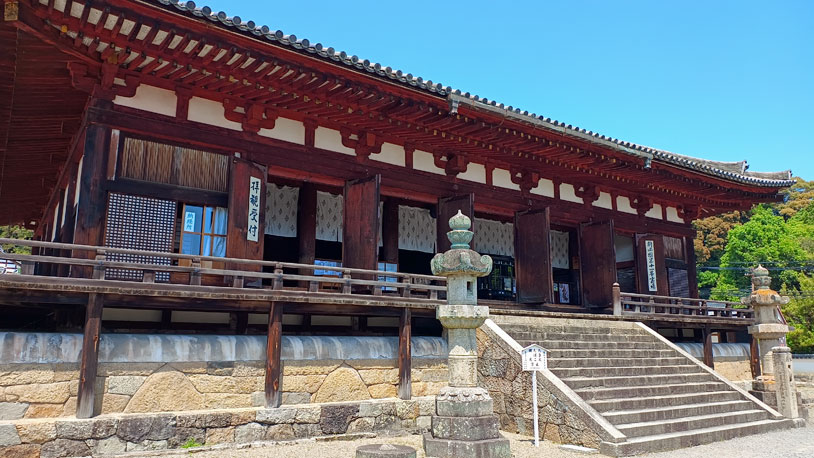
The Main Hall where the Taima-Mandala is housed
Taima-dera Temple and Princess Chujo
I had known of Taima no Kehaya long before I became familiar with the village of Taima or Taima-dera Temple. In a children's illustrated book that retold stories from the age of the gods and legendary heroes based on the Nihon Shoki (Chronicles of Japan), Taima no Kehaya was depicted as a wild-looking, bronze-skinned, hairy man who appeared immensely strong. Yet when he wrestled Nomi no Sukune - a man who, at first glance, looked pale, intellectual, and rather frail - Kehaya was defeated, his ribs broken and his life ended.
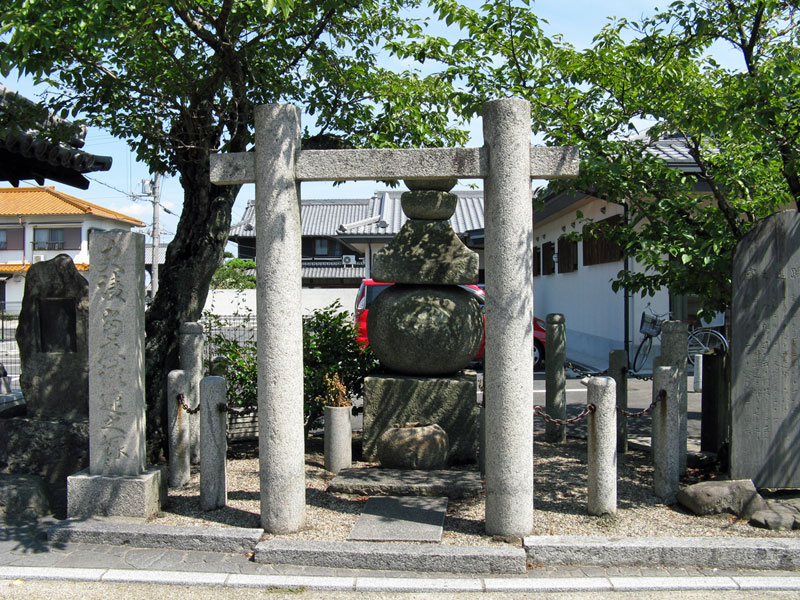
Kehaya monument
As a child, however, it was not the victorious Nomi no Sukune who left the stronger impression on me, but Kehaya, whose fearsome appearance had been so vividly portrayed. Today, near the Ryogoku Kokugikan in Tokyo, there stands a shrine dedicated to Nomi no Sukune, but the defeated Kehaya is not similarly enshrined there. Later, when I moved to Kyoto to attend university, I learned that there was a settlement called Taima in the southern part of the Nara Basin and that Taima no Kehaya was said to have come from there. When I visited, I was surprised to find a monument to Kehaya, and that he, like Sukune, was revered as a deity of sumo.
In the Nihon Shoki, Taima no Kehaya is remembered solely for his bout of sumo. Nomi no Sukune, on the other hand, is described as a man from Izumo. He is said to have argued that it was wrong for people to be buried alive as retainers when a noble person died, and proposed that clay figures be used in their place. When this proposal was accepted, he became the head of the artisans responsible for making these figures, later known as haniwa. One cannot help wondering what significance the appearance of Izumo carries in such a context.
Be that as it may, more than half a century later, when I had occasion to visit Nara again, I felt that I should stop by Taima-dera once more. I remembered the tranquil atmosphere of the approach leading to the temple and the somewhat haphazard arrangement of its many buildings. Above all, I remembered that the principal object of worship in the main hall was not a statue but an enormous mandala rendered in woven textile form.
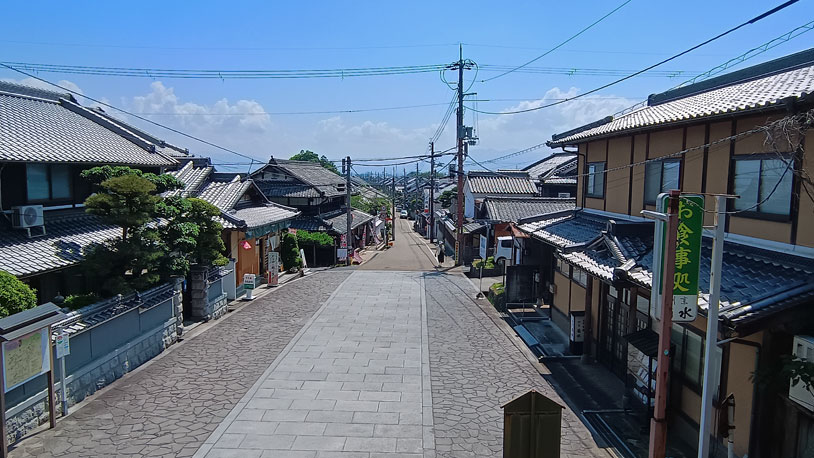
The approach to Taima-dera Temple, viewed from the Niomon Gate. A shop along the approach to Taima-dera.
The origins of Taima-dera are said to lie in a temple called Manpozoin, which was founded in Kawachi Province by a younger brother of renowned Prince Shotoku. In 681, however, the temple was reportedly relocated to Taima by a local powerful clan, onto land donated by En-no-Gyoja, the famed founder of Shugendo. Originally, like Yakushi-ji in Nara, it was a well-ordered example of Tenpyo-period temple architecture, with the Kondo (Golden Hall) and Kodo (Lecture Hall) aligned on a north-south axis and pagodas standing to the east and west of the Kondo. Although the Kondo and Kodo were later rebuilt, the eastern and western pagodas remain as they were at the time of the temple's founding. Taima-dera is the only temple in Japan where both original pagodas from the Tenpyo period (629 - 649) still survive.
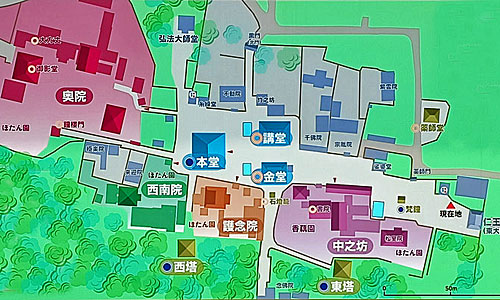

Had the temple remained only that, it would have preserved a highly symmetrical and orderly appearance. However, after Kobo-Daishi undertook religious training in seclusion here, the temple became affiliated with the Shingon sect. Later, as Jodo sect was introduced, subsidiary temples (tatchu) belonging to different sects were established within the precincts. This gradual accumulation of religious institutions likely gave the complex the somewhat cluttered appearance it has today.
Then, during the Nara period, Princess Chujo, a daughter of the Fujiwara clan, took the tonsure at one of these subsidiary temples, Nakanobo. According to legend, she later wove a magnificent mandala depicting the Paradise in a single night using lotus fibers. Devotion to this mandala grew steadily, and the small hall that originally housed it was repeatedly expanded until it became the Hondo (Main Hall) of Taima-dera itself. As a result, the temple's original axis, which had faced south, came to orient itself toward the east. Seen from the Main Hall today, the two pagodas appear somewhat cramped against the mountainside to the right.
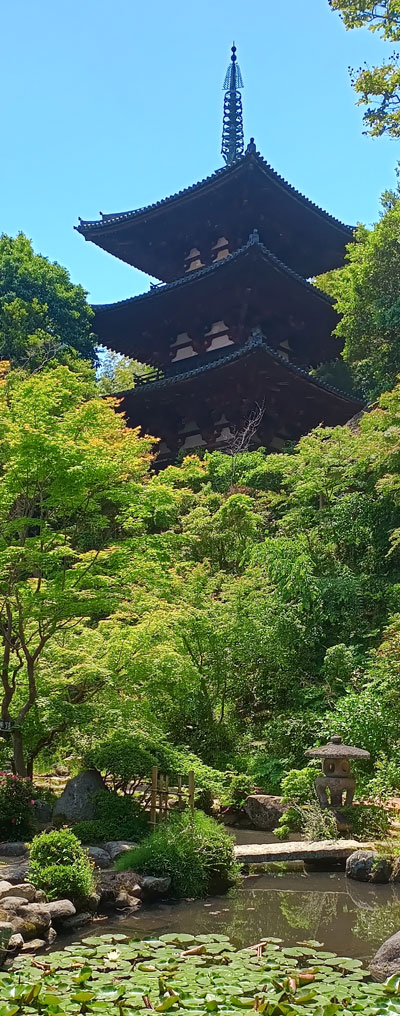
Eastern Pagoda seen from the garden of Nakanobo
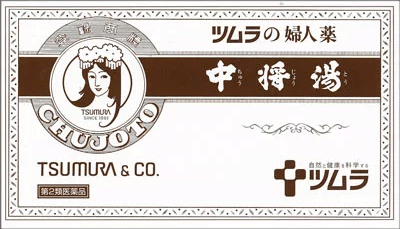 Incidentally, Princess Chujo is also said to have studied herbal medicine at this temple. After becoming a nun, she reportedly visited a household that had once cared for her and prescribed medicine for the lady of the house, who was suffering from poor health. The Tsumura family preserved this prescription through the generations and, in the Meiji period, began marketing it as "Chujo-to". It became a popular remedy and remains available today. Remarkably, a medicine said to have been prescribed in the Nara period is still in use in modern Japan.
Perhaps because Taima-dera lies off the standard tourist routes, relatively few visitors come here. Yet Nakanobo, the sub-temple where Chujo-hime took her vows, not only possesses a magnificent garden but also operates a copying studio for Buddhist images and sutras (shabutsu and shakyo) in one section of its spacious buildings. Such facilities are offered by many temples in the Nara area, but interestingly, a woman in the amateur orchestra to which I belong recently signed up for a shabutsu session at Nakanobo. That made me wonder whether my impression of the temple as a quiet, little-visited place was simply a matter of timing. Perhaps it is not normally as tranquil as it seemed when I happened to visit.
 2026.06.06