


- Provinces top
- Hokkaido
- Milky House in Churui
- Tokachi Station
- Suzuki-san - dairy farmer
- Kyodogakusha Shintoku
- Tohoku
- Ohsawa Onsen
- Tsurunoyu - hot spring
- Kanto & Koshinetsu
- Last concert in M-Uonuma
- Concert in Minami-Uonuma
- Tomaru pig farm
- Kofun in Gunma
- Inariyama Kofun
- Koma Shrine and Shoten-in
- Choshi - fish and soy sauce
- Narita Dream Dairy Farm
- Iwai - sea-bathing town
- Yokosuka - Mikasa and Curry
- Nihon Minka-en
- Hokuriku
- Noto Peninsula
- Yunode Ryokan
- Yuwaku Onsen
- Kanazawa
- Kansai
- Fushimi Inari-Taisha
- Home-cooking dishes in Kyoto
- Sannen-zaka and Ishibe-koji
- From Kitano to Shimogamo
- Kiyomizu and neighborhood
- Kyoto - then and now
- Imaicho - Time-Traveling to Edo
- Yamatai and Yamato
- Mount Miwa
- Asuka - cradle of Japan
- B&B Asuka
- Taima-dera and Princess Chujo
- Shikoku
- Yusuhara - a remote town
- Kochi - Sunday Market
- Himawari Milk Company
- Suigeitei - whale plate
- Kyushu
- Kumamoto Castle
- Wafudo confectionery
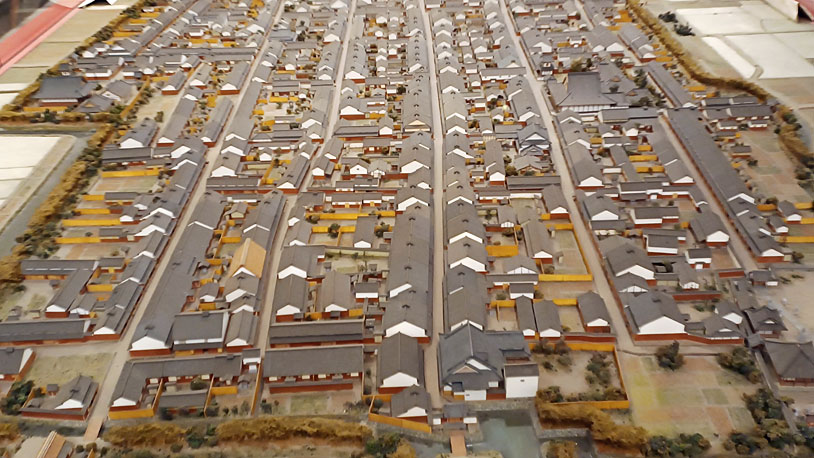
The scale model of Imaixho, viewed from the west, at Hanairaka, the exhibition hall dedicated to the history and culture of Imaicho.
Imaicho - Time-Traveling to Edo Japan
I was astonished. It felt as if I had slipped back in time to the Edo period. Stately traditional Japanese houses with tiled roofs lined both sides of the streets. No matter which road I took or which corner I turned, all I could see were old Japanese homes. And the town was remarkably quiet.
In Imaicho, about 500 of the approximately 760 buildings that still stand within the district are traditional structures dating back to the Edo period. This is the largest concentration of such buildings in any townscape in Japan, and the area has been designated an Important Preservation District for Groups of Traditional Buildings, where the appearance of the past has been preserved almost intact.
There are many places in Japan, such as former post towns, where old buildings remain along historic roads. In those cases, however, the preservation is largely linear. Imaicho is different: it is preserved as an entire area. The whole town - 600 meters from east to west, 310 meters from north to south, covering 17.4 hectares - retains the character of the Edo period. I had known these facts intellectually, but actually stepping into the town was overwhelming. I had no idea that a place like this still existed in Japan.
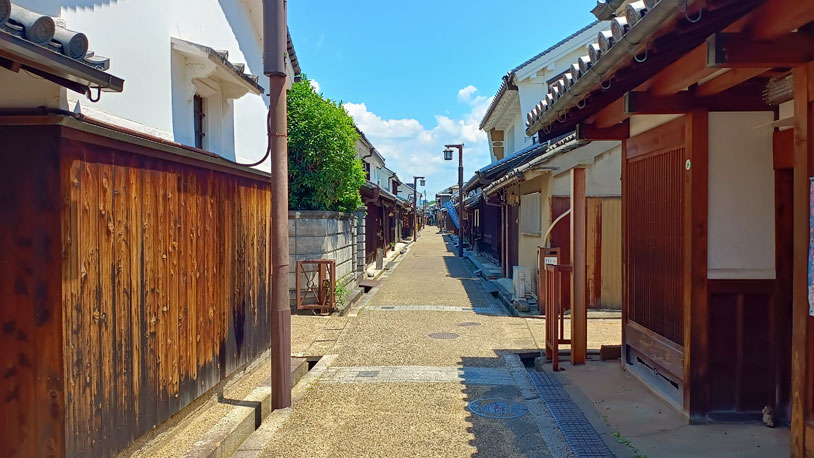
Honmachi street |
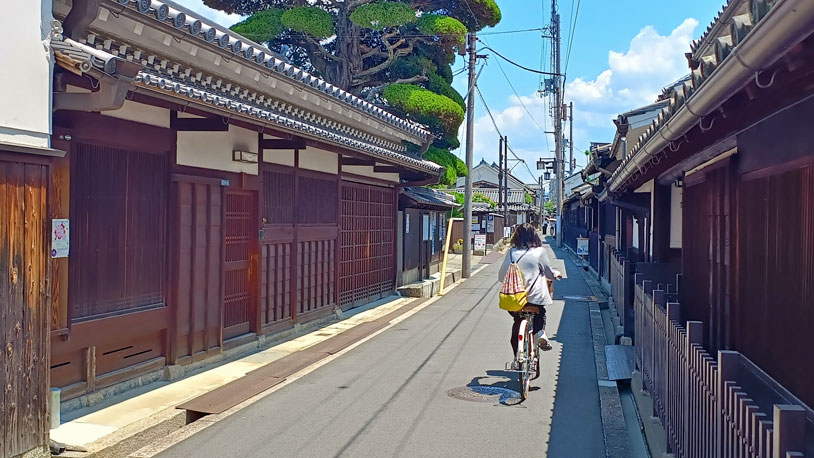 Midosuji street |
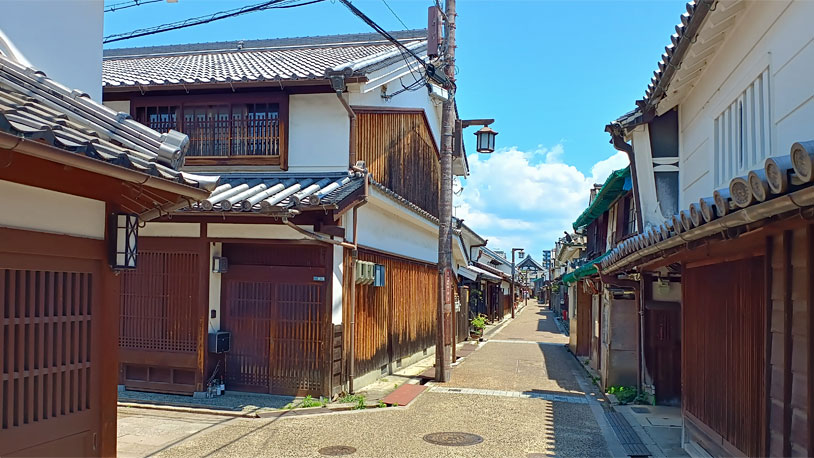 Daikumachi street |
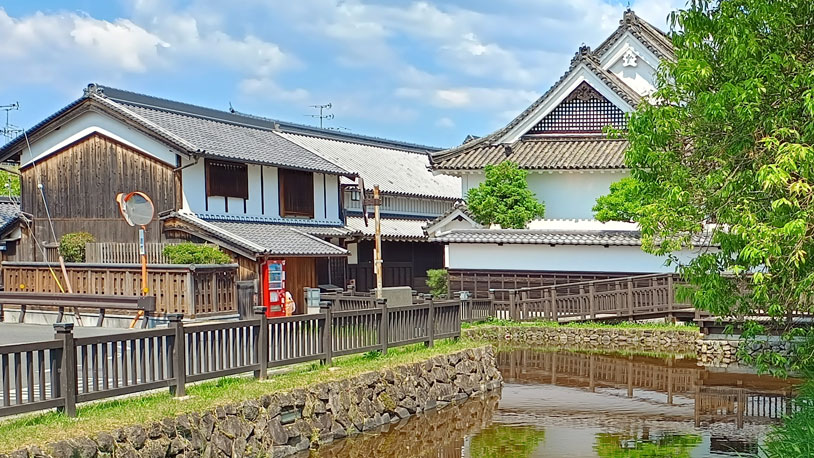 Imanishi House: Once the Center of Self-Governance |
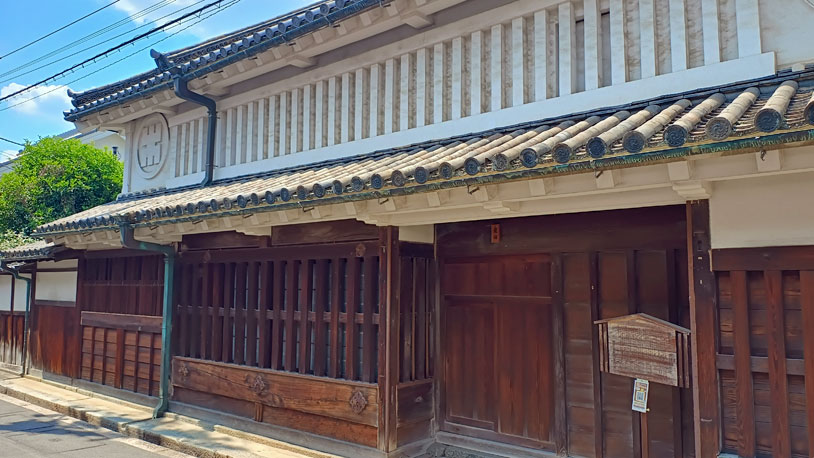 Toyoda House, the residence of a sake-brewing family |
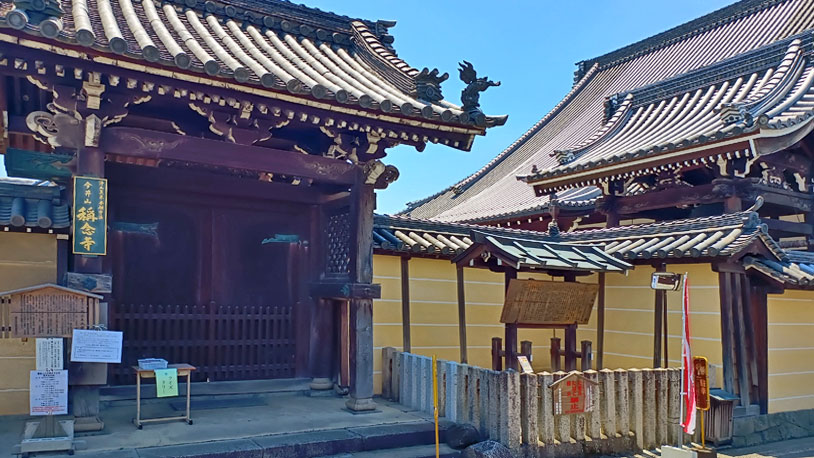 Shonenji Temple |
Imaicho first appeared in historical records at the end of the fourteenth century as an estate belonging to Kofukuji Temple. In the sixteenth century, it developed into a town of Jodo Shinshu followers who had gathered around Shonenji Temple. Amid the turmoil of the Warring States period, Imaicho grew as a jinaimachi?a fortified religious town whose residents united for self-defense behind moats and other defenses, much like Ishiyama Hongan-ji, the stronghold of the Jodo Shinshu sect.
After Ishiyama Hongan-ji was defeated by Oda Nobunaga, Imaicho also surrendered to him. However, the town was allowed to retain a considerable degree of self-government, and commerce flourished. Its prosperity became so renowned that people spoke of “Sakai on the sea, Imai on the land.” This wealth continued into the Edo period, but by the eighteenth-century heavy taxation had brought hardship to the town, and its former prosperity gradually faded.
Even so, Imai remained exceptionally affluent compared with neighboring communities well into the Meiji era. When Emperor Meiji made his first visit to the Mausoleum of Emperor Jimmu in 1877, his party stayed in Imaicho. The emperor himself lodged at Shonenji Temple, while his attendants were accommodated in the town’s prominent merchant houses. There was simply nowhere else in the surrounding area capable of hosting the imperial entourage.
Despite the remarkable concentration of traditional buildings that survive here, relatively few tourists can be seen. The people of Imaicho continue to live their ordinary daily lives within this historic townscape. While researching the town, I learned that when Japan ratified the World Heritage Convention in 1992, Imaicho attracted the attention of UNESCO, ICOMOS, and other international experts. As an exceptionally rare urban site that preserves the structure of a medieval jinaimachi almost in its entirety, it was highly regarded and considered a strong candidate for World Heritage inscription.
According to local accounts, however, the proposal was ultimately declined. At the time, residents feared that World Heritage status might impose restrictions on the town as a living community, and a broad local consensus emerged that preserving their way of life was more important than seeking international recognition.
Compared with the current trend, in which communities across Japan eagerly seek World Heritage status as a means of attracting tourists and revitalizing their local economies, I find Imaicho's decision refreshingly principled and firmly grounded in reality.
Moreover, Imaicho is not merely a place with a large number of old buildings. Following its designation as an Important Preservation District for Groups of Traditional Buildings in 1993, efforts have been made to protect the historic townscape while also improving disaster preparedness. One notable initiative has been the gradual undergrounding of utility lines. Although telephone poles still remain along the street in front of Shonenji Temple, many of the roads I walked had no utility poles at all, only unobtrusive street lamps.
The town's approach goes beyond simply removing overhead wires. Measures such as earth-toned pavement and granite-lined drainage channels have been introduced to ensure that modern infrastructure blends harmoniously with the historic environment. Everywhere, there is a clear sense that careful attention has been paid to preserving the overall character and beauty of the townscape.
That said, Imaicho faces the same challenge confronting communities throughout Japan: population decline. In photographs taken shortly after the Second World War, several young men can be seen gathered on motorcycles in front of Shonenji Temple. The town appears lively and full of energy. Compared with those images, the present-day streets feel strikingly empty. The number of young people has no doubt decreased even further. Maintaining such an extensive historic townscape while coping with a shrinking population is clearly no easy task.
 2026.06.03